Crown Lane gardeners for small back gardens Morden: a practical guide to making every inch work harder
If you have a compact outdoor space in Morden, you already know the feeling: one day it looks manageable, the next it feels cluttered, shaded, windy, weedy, and somehow smaller than it did last spring. That is exactly where Crown Lane gardeners for small back gardens Morden can make a real difference. The aim is not to cram more into a tiny plot. It is to shape a garden that feels calmer, more usable, and much easier to live with day to day.
Small back gardens reward good planning. They also punish guesswork. A few poor planting choices, the wrong layout, or a neglected border can eat up space fast. In this guide, you will find practical ways to approach a small garden sensibly: what local gardeners usually focus on, how the work is typically carried out, what helps most, what to avoid, and when it makes sense to bring in help rather than keep battling it alone.
Expert summary: in a small back garden, the big wins usually come from simplifying the layout, choosing plants that earn their keep, and keeping maintenance realistic. That sounds obvious, but honestly, the obvious stuff is where most gardens improve first.
Why Crown Lane gardeners for small back gardens Morden matters
Small gardens are deceptively demanding. On paper, they seem easier: less lawn, fewer beds, less to cut back. In real life, the opposite can be true. Every metre has to justify itself. A narrow path can make the whole space feel cramped. A tall fence can create shade where you wanted flowers. A thirsty lawn can become a maintenance headache. That is why local experience matters.
Crown Lane gardeners for small back gardens Morden usually think in terms of function first. They ask practical questions: How do you move through the space? Where does the light fall in the morning and late afternoon? Is there room to sit without blocking access? Are you after privacy, planting, play space, or all three? Those questions shape a better result than any generic one-size-fits-all design ever could.
Morden gardens also have a very British set of realities to deal with. You get a bit of everything: damp winters, sudden summer heat, the odd windy spell, and plenty of homes where the back garden is closely overlooked. A good small-garden approach has to handle that mix without becoming fussy. If the layout is right, the space feels bigger. If it is wrong, you notice every awkward corner. Simple as that.
Small gardens also benefit from sensible maintenance planning. A neat space is easier to enjoy, but only if it stays neat without eating your weekends. Services such as regular garden maintenance and selective lawn care can make a surprising difference in a compact plot, because small gardens show clutter faster than larger ones.
A small back garden should feel intentional, not cramped. The goal is not to hide the size; it is to use the size well.
How Crown Lane gardeners for small back gardens Morden works
The process usually begins with a walk-through and a bit of honest discussion. Not every garden needs a full redesign. Sometimes the answer is selective pruning, a border reset, and better planting. Other times the space needs a proper rethink: maybe the lawn is too dominant, maybe the patio takes too much room, or maybe the garden needs vertical structure to create height without losing floor area.
In small back gardens, a good gardener works in layers. First comes the structure. Then the surfaces. Then the planting. Then the detail. That order matters. If you choose plants before fixing access and layout, you can end up with a lovely border that is awkward to reach, trim, or water. A bit frustrating, to be fair.
Common jobs in a compact garden include tidying overgrown edges, reshaping beds, reducing bulky shrubs, improving drainage, refreshing mulch, and introducing compact planting schemes. A gardener may also help with landscaping changes, such as replacing a tired lawn strip with a gravel seating nook, a planting pocket, or a low-maintenance ground cover zone.
There is often a strong emphasis on smart visual tricks too. Vertical features, staggered planting heights, reflective surfaces, and slimline seating all help. If you want ideas that use the walls and fences rather than the floor, the article on vertical gardening design is a useful companion piece. Likewise, if your back garden feels boxed in, fast privacy hedges and evergreen climbers for shade can be excellent space-savers when chosen carefully.
The work is then refined around how you actually use the garden. That may sound obvious, but it is where small gardens live or die. A family with a dog needs durable access and plant protection. A couple who likes a quiet evening drink wants seating that catches the last of the sun. A keen grower may want herb beds, container plants, and a tidy potting area. Different brief, different shape.
Key benefits and practical advantages
The best small-garden improvements are not flashy. They are the kind that make daily life easier. Here are the benefits people usually notice first.
- More usable space: a tighter layout can actually feel larger when circulation is improved and clutter is removed.
- Easier upkeep: less dense planting, better edging, and clearer surfaces mean less week-to-week effort.
- Better light and air: pruning and layout changes can help sunlight and airflow reach the whole garden.
- More privacy: slim hedging, trellis planting, and fencing adjustments help reduce overlooking without consuming precious ground area.
- Better seasonal interest: the right mix of evergreen structure and changing colour keeps the space looking alive year-round.
- Less wasteful spending: choosing plants and materials with the garden's size in mind usually saves money over time.
There is also a design advantage that is easy to overlook: small gardens are easier to turn into a recognisable style. You do not need acres of space to create a calm zen corner, a child-friendly patch, a productive herb area, or a tidy retreat with seating. In fact, smaller gardens can be more distinctive because every detail has more impact.
For readers thinking about lower-maintenance colour and texture, the guide to choice ground covers can help replace awkward bare patches with something cleaner and more resilient. And if the garden feels dated or a bit tired, first steps in garden restoration is a good way to think about a phased refresh rather than a costly rip-out.
Who this is for and when it makes sense
This approach is ideal if your back garden is small enough that every decision matters. That might include terraced homes, compact semis, new-build plots, side-return style spaces, or mature gardens that have become overgrown and hard to manage. If your garden looks okay from a distance but feels awkward when you are actually in it, that is a classic sign that layout is doing the wrong job.
It also makes sense if you are tired of gardening by firefighting. You know the drill: one weekend you cut back the hedge, the next you are dealing with weeds, then the lawn, then a border that has swallowed the path. Small spaces can become a cycle of maintenance, unless they are designed to be manageable in the first place.
Families often want safe, flexible spaces where children can play without the garden feeling hard-edged or over-designed. If that sounds familiar, the article on garden design for children is worth a look. Dog owners may lean toward durable planting and protected zones, and there is a helpful piece on dog-friendly garden balance too.
In our experience, homeowners also tend to call for help when the garden has one of these issues:
- too much shade from fences, trees, or neighbouring buildings
- a lawn that is too small to justify the upkeep
- poor drainage or muddy corners after rain
- patchy planting that never quite settles in
- not enough privacy from nearby windows
- storage, bins, or utility items making the garden feel cluttered
If any of that sounds familiar, you are probably at the point where expert input pays for itself in clarity alone. Truth be told, a lot of gardens are not "bad" so much as unfinished.
Step-by-step guidance
A small back garden project works best when it is broken into sensible stages. Rushing straight to plants without sorting the ground conditions is a common mistake, and it usually comes back to bite later.
- Measure the usable space properly. Include paths, gates, access points, bin areas, and any awkward corners. Not just the pretty bit. All of it.
- Map light, shade, and wind. Note where the sun lands at different times of day. A morning-shady garden may suit different plants from a south-facing space that heats up fast.
- Decide the garden's main job. Relaxing, entertaining, playing, growing food, letting a dog out, or a mix of all five? Small gardens need a clear priority.
- Simplify the hard landscaping. Keep paving, edging, and any built features honest and proportionate. Oversized slabs or chunky structures can overwhelm a small plot.
- Choose compact planting. Use plants that suit the scale of the space rather than filling it with big shrubs that need constant cutting back.
- Add vertical interest. Trellis, climbers, wall planters, slim hedging, and tiered containers help create depth without consuming floor space.
- Use mulch and soil improvement. Better soil means healthier plants and fewer weeds. The article on waste transformation and soil vibrancy is relevant if you want to understand how organic matter supports long-term garden health.
- Finish with a maintenance plan. Decide what gets trimmed, watered, fed, and cleared each season so the garden stays manageable.
A good rule of thumb: if the plan only looks good on paper but seems impossible to keep tidy in real life, it is too ambitious. Small gardens need elegance with a bit of restraint. Not less personality. Just less chaos.
If you are building the garden around productive planting, herb garden ideas can fit beautifully into tiny spaces, especially near the kitchen door or patio edge. If seating is a priority, it can help to look at inspired seating ideas before buying something bulky that eats the whole patio.
Expert tips for better results
There are a few habits that consistently improve small gardens. Some are design principles, some are maintenance habits, and some are just common sense wearing gardening boots.
- Keep sightlines open. If you can see the back of the garden from the house, it usually feels deeper.
- Repeat materials and colours. A consistent palette makes a small space look calmer and less chopped up.
- Use fewer, better plants. A strong structure beats a jumble of random pots every time.
- Plant for year-round shape. Evergreen bones matter in winter, especially when the leaves are gone and the garden can look bare.
- Keep edges crisp. Clean lines give a small garden a finished feel, even if the planting is quite relaxed.
One particularly effective trick is to create a "pause point". That might be a bench under a climber, a small gravel zone, or a container grouping that draws the eye forward. It helps the eye travel through the garden rather than stop dead at the first obstacle. Little thing, big difference.
Another useful tip is to plan for weather, not just aesthetics. Morden gardens can take a beating from winter damp and blustery spells. The piece on protecting gardens from severe weather and the one on designing for excessive wind both align well with the realities of a small exposed back garden.
If you are short on time, do not underestimate the value of a seasonal tidy-up. A brief but regular cut-back is often better than a dramatic overhaul once a year. Less drama. More enjoyment. That is the dream, really.
Common mistakes to avoid
Small gardens often fail because the owner tried to make them do too much. It happens. The enthusiasm is there, but the space says otherwise.
- Using oversized plants: large shrubs can overwhelm a narrow garden and create more work than they solve.
- Over-paving the area: too much hard landscaping can make the garden feel hot, lifeless, and smaller.
- Ignoring access: if the border blocks bins, tools, or watering routes, maintenance gets irritating fast.
- Chasing trends blindly: a style that works in a large show garden may be awkward in a compact Morden plot.
- Forgetting winter structure: bare stems, evergreen texture, and tidy lines matter when flowers fade.
- Leaving weeds to "sort themselves out": they rarely do, and small spaces show the damage quickly.
Another mistake is treating every corner as equally important. It is tempting to fill every gap. But in a small back garden, a bit of empty space can be a feature, not a failure. Breathing room helps the whole layout feel intentional.
Also, do not make everything look precious. A garden used by children, pets, or just busy adults should have some tough zones. If not, you end up worrying about every footstep. Not very relaxing, is it?
The practical weed-control guide on weed control is a useful reminder that prevention beats repeated rescue work. And if your space is already tired and messy, the article on simple garden ideas that save time and money can help you prioritise small wins instead of chasing everything at once.
Tools, resources and recommendations
You do not need a shed full of specialist equipment to improve a small back garden. In fact, too much gear can become part of the clutter problem. A lean toolkit is usually best.
Useful tools for compact gardens:
- sharp hand pruners for small shrubs and deadheading
- a border fork for loosening compacted soil in tight beds
- a narrow spade or trowel for container work and edging
- garden shears for shaping hedges and climbers
- a watering can or compact hose setup, depending on access
- gloves, secateurs, and a stiff broom for regular tidying
If you want a broader overview of what every small garden really needs, the article on fundamental gardening tools is a neat companion read.
For design inspiration, it can help to read around the problem rather than just the service itself. For example, container planting can make a tiny garden flexible, especially if you like changing displays through the year. The guide on container gardening is especially relevant where ground space is limited. For a calmer style, zen garden ideas may help you strip away unnecessary clutter. And if the garden needs a playful edge for family life, family-friendly harvest gardens can be a lovely direction.
Resources are not just things you buy. They are also habits. Regular pruning, seasonal feeding, leaf clearing, and checking fence lines after storms all count. Small gardens respond quickly to care, which is encouraging. Neglect shows too, yes, but the good news is improvement shows quickly as well.
Law, compliance, standards and best practice
Most small back garden work is straightforward, but a few practical standards are worth keeping in mind. The main point is to stay sensible, safe, and respectful of boundaries.
If work involves trees, hedges, fences, or structures close to a boundary, it is wise to check ownership and any shared responsibilities before making changes. For example, overhanging branches, root disturbance, or fence replacement can affect neighbours. A calm conversation up front saves hassle later. Garden disputes are rarely improved by surprise pruning at 8 a.m. on a Saturday.
Safety matters too. Using ladders, power tools, or heavy materials in a confined space demands care. Reputable gardeners should work with proper risk awareness, and many will have their own internal health and safety procedures. If that matters to you, pages such as health and safety policy, insurance and safety information, and terms and conditions can help set expectations around responsibility and service boundaries.
For projects involving hard surfaces, drainage, or major layout changes, it is sensible to think about long-term durability rather than only immediate appearance. Good practice usually means using proportionate materials, keeping access clear, and making sure maintenance remains realistic. If you are planning more than a light refresh, it can also help to review payment and security and pricing and quotes so there are no awkward surprises mid-project.
Privacy, accessibility, and everyday usability are best-practice issues too. A garden should be pleasant, but it should also be navigable. If someone in the household needs a wider route, a stable surface, or fewer trip hazards, those needs should shape the design. That is just good gardening, honestly.
Options, methods and comparison table
There is no single right way to improve a small back garden. The best method depends on budget, level of change, and how much maintenance you want to take on. Here is a simple comparison to help you think it through.
| Approach | Best for | Main advantage | Possible drawback |
|---|---|---|---|
| Light tidy-up and pruning | Gardeners who already like the layout | Quick improvement with low disruption | Does not fix deeper design issues |
| Planting refresh | Gardens that feel tired but structurally fine | Strong visual impact without major building work | Needs the right plant choices to avoid overcrowding |
| Layout rework | Gardens that feel awkward or cramped | Can completely change how the space feels | More planning and usually a higher cost |
| Vertical planting and screening | Small gardens needing privacy or height | Saves floor space while adding structure | Requires maintenance and good fixing points |
| Low-maintenance ground cover | Owners who want less weeding and less mowing | Practical and tidy over time | Can look sparse if not designed carefully |
For many Crown Lane back gardens, the sweet spot is a blend: a clearer layout, a few structural plants, a compact seating area, and one or two low-maintenance features that do a lot of visual work. That often beats a full overhaul.
Case study or real-world example
Picture a modest rear garden behind a Morden terrace. It has a patchy lawn, a narrow run of paving, a couple of tired shrubs, and a fence that makes the whole thing feel dark at one end. Nothing dramatic, just a space that has quietly stopped being enjoyable.
The first move is not to rip everything out. It is to step back and work out what the garden actually needs. In this kind of space, the strongest result usually comes from four actions:
- reducing the lawn to a proportionate size or replacing part of it with planting
- clearing out overgrown shrubs that block light and movement
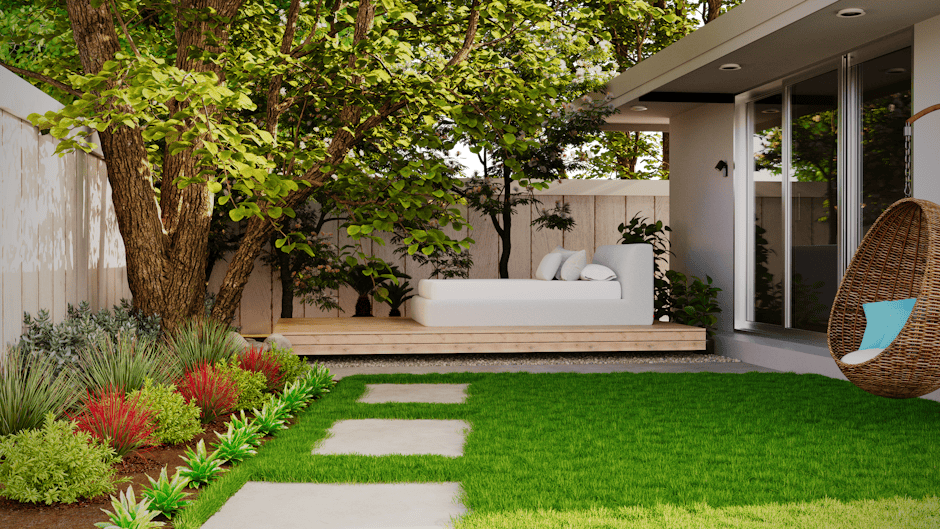
- adding a slim seating area with a clear visual line back to the house
- using fence-height planting or climbers to create privacy without taking up much ground
That is not a dramatic transformation on paper. In practice, though, it can make the space feel noticeably larger and far more coherent. The garden becomes a place you can walk into without mentally preparing for maintenance. And that matters. People feel that difference quickly, often in the first week or two after the work is done.
If the owner also wants seasonal colour, a few containers and a handful of well-placed perennials can keep the space interesting without turning it into a chore. A small garden often looks best when it is edited rather than stuffed full. A bit like a well-packed suitcase, if we are being honest.
Practical checklist
Use this checklist before starting work on a small back garden in Crown Lane or anywhere nearby in Morden.
- Have you measured the real usable space, not just the boundary?
- Do you know where the sun, shade, and wind hit during the day?
- Have you identified the garden's main purpose?
- Are any plants or features too large for the space?
- Is access to bins, tools, and watering points still easy?
- Do you have a plan for privacy if the garden is overlooked?
- Will the layout still make sense in winter, not just in June?
- Is there enough room for maintenance without constant reshuffling?
- Have you chosen at least one low-maintenance element?
- Do you know who to speak to if the job needs a more detailed quotation?
If you are at the point of comparing ideas, it can be useful to learn a bit more about the wider range of gardening services available, or to read about about us information if you want a better sense of the people behind the work. For direct help, you can always start at the contact page.
Conclusion
Crown Lane gardeners for small back gardens Morden are at their best when they bring structure, restraint, and practical judgement to a space that needs more clarity than clutter. A small garden does not need to be filled. It needs to be understood. Once the layout, light, planting, and maintenance are aligned, even a modest back garden can feel generous, welcoming, and much easier to enjoy.
The good news is that you rarely need to do everything at once. Start with the problem that matters most: too little privacy, too much maintenance, poor planting, awkward access, or a layout that no longer fits the way you live. Then build from there. Small gardens reward patience, and they repay thoughtful decisions quickly.
Get a free quote today and see how much you can save.
And if you are standing at the back door wondering where to begin, that is completely normal. Start with one corner, one plan, one honest improvement. The rest tends to follow.
Frequently Asked Questions
What do Crown Lane gardeners for small back gardens Morden usually help with?
They commonly help with tidy-ups, pruning, planting, lawn reduction, edging, privacy planting, and layout improvements that make a compact garden easier to use.
How do I make a small back garden look bigger?
Open sightlines, keep the layout simple, repeat materials, use vertical planting, and avoid bulky features. A smaller number of well-chosen elements usually works better than lots of little ones.
Is a lawn a good idea in a very small garden?
Sometimes yes, but not always. If mowing and edging feel like more work than the lawn is worth, part-replacing it with planting, paving, or ground cover can be a smarter choice.
What plants work best in a compact garden?
Compact shrubs, climbers, herbs, perennials, and disciplined evergreens often work well. The key is choosing plants that suit the available light and do not outgrow the space quickly.
Can small gardens still have privacy?
Yes. Trellis, climbers, slim hedging, and carefully placed screens can improve privacy without taking up much floor space. It is often more effective than trying to build a heavy barrier.
How often should a small back garden be maintained?
That depends on the planting, but small gardens usually benefit from lighter, more regular maintenance rather than big seasonal battles. A little attention each month can prevent a lot of catch-up work.
What is the biggest mistake people make with small gardens?
Overfilling them. Too many plants, too much paving, or oversized features can make the space feel cramped. Less clutter usually creates more comfort.
Can small back gardens support children or pets?
Absolutely, provided the design is practical. Durable surfaces, protected planting, and clear movement routes make a big difference. Safety and excitement can coexist quite nicely, actually.
Do I need a full redesign, or is a tidy-up enough?
If the structure is sound, a tidy-up and planting refresh may be enough. If the garden feels awkward, dark, or hard to move through, a more complete rethink may be worth it.
What should I ask before booking a gardener for a small garden?
Ask how they would improve the layout, what maintenance the design will need, whether they have experience with compact plots, and how they handle safety, access, and pricing.
Are vertical gardens suitable for Morden back gardens?
Yes, especially where space is tight. Vertical planting is useful for climbers, herbs, decorative displays, and privacy screening, as long as the supporting structure is secure and well maintained.
How do I get started if my garden feels overwhelming?
Begin with one simple aim: clear the clutter, define the main use of the space, and make one part easier to maintain. Once that first win is in place, the rest feels much less daunting.